Independent guide · Betting
How to calculate the win and place parts of an each‑way bet (including place fractions & dead‑heats)
Step‑by‑step explanation and worked examples showing how an each‑way stake splits into win and place bets, how place fractions are applied, and how dead‑heat deductions are handled under standard UK operator rules.
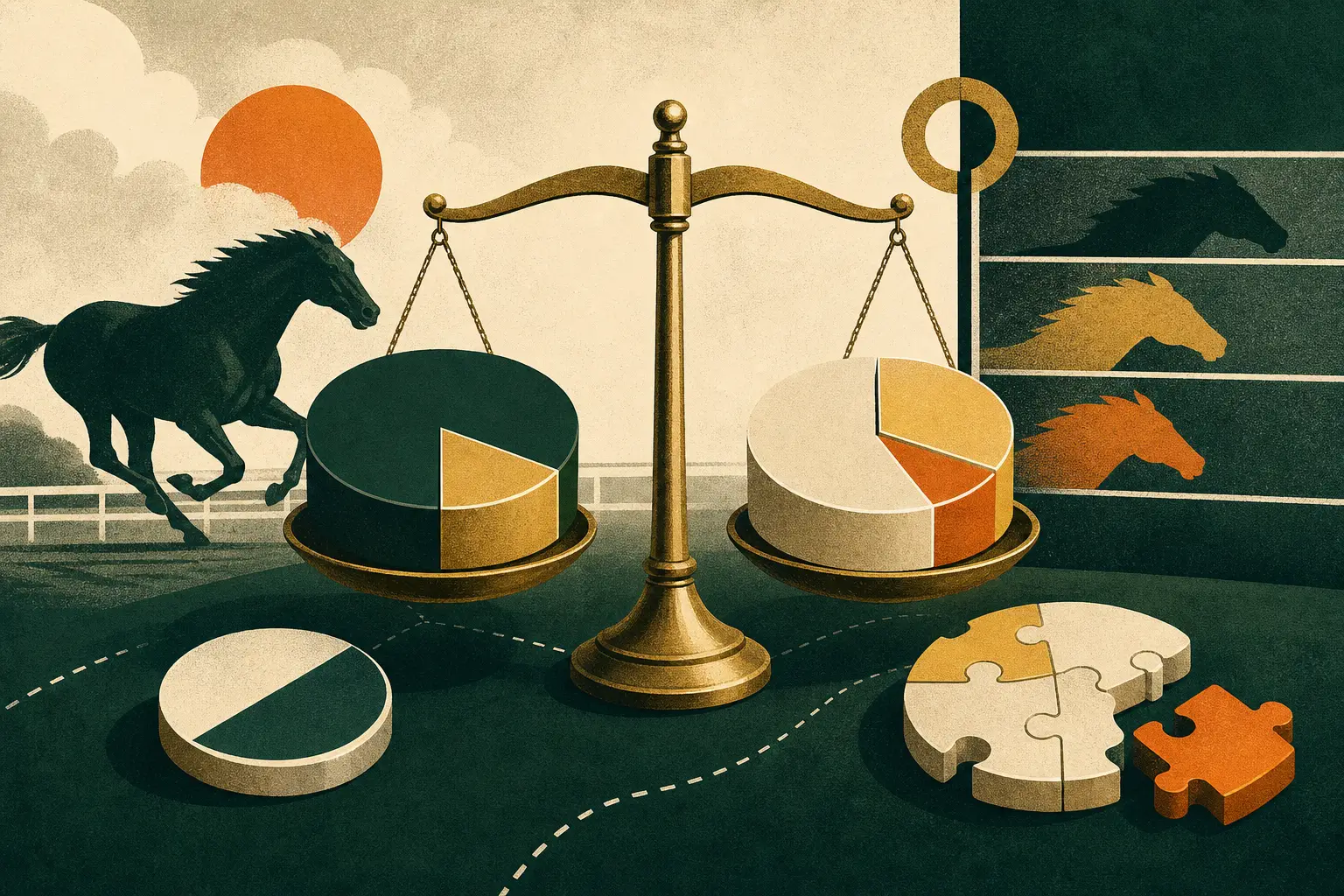
An each‑way bet consists of two equal stakes: a win bet and a place bet. The place leg pays at a fraction of the win odds (commonly 1/4 or 1/5). If a paid placing is a dead heat, the stake on that part is divided by the number of tied runners and only the reduced stake is paid at full place odds.
What an each‑way bet is — quick, definitive
An each‑way (EW) bet is two separate bets of equal stake placed together: one 'win' bet and one 'place' bet. For example, a £10 each‑way is £10 on the selection to win plus £10 on the selection to place.
Treat the two legs independently when calculating returns: the win leg pays full quoted win odds if the selection wins; the place leg pays at a reduced (fractional) rate if the selection finishes in one of the places paid by the operator.
- EW stake = win stake + place stake (equal amounts).
- Win leg uses the quoted win odds; place leg uses a fraction of the win odds.
How the place part is calculated (place fraction)
Bookmakers express place payouts by applying a place fraction to the quoted win odds. Common UK fractions are 1/4 and 1/5; other markets may use 1/3 or custom fractions. Place odds (fractional) = win fractional odds × place fraction.
To get the place return (no dead‑heat): place return = place stake × (1 + place fractional odds). If you use decimal odds, convert consistently: decimal win = fractional win + 1; decimal place = 1 + (fractional win × fraction).
- Place profit = place stake × (win fractional odds × place fraction).
- Place return = place stake + place profit.
Dead‑heat: how stakes and payouts change
When a dead‑heat occurs for a paid placing, standard UK operator settlement divides the stake on the affected selection(s) by the number of tied runners and pays full odds on the reduced stake. The remainder of the stake is normally lost.
Formally: reduced stake = original stake ÷ N (N = number of tied horses). Payout for the tied portion = reduced stake × (1 + applicable odds). Example B below shows the arithmetic for a two‑way dead‑heat on the place part.
- Reduced stake = stake ÷ number tied.
- Payout = reduced stake × (1 + applicable odds); leftover stake is lost.
Sequencing, Rule 4 and operator exceptions
If other adjustments apply (Rule 4 non‑runner deductions, promotional extra places, exchange commission), check operator rules for sequencing. Common practice is to apply Rule 4/non‑runner deductions before performing dead‑heat division, but implementations vary.
Operators may round returns to the nearest penny or apply brand‑specific settlement conventions. For edge cases always read the bookmaker’s market rules on dead‑heat and each‑way settlement before placing a bet.
- Apply Rule 4 / non‑runner adjustments where the operator specifies, usually before dead‑heat.
- Expect rounding differences and check the operator’s published settlement rules.
Practical checklist
- Note your total each‑way stake and confirm it splits evenly between win and place.
- Write down the quoted win odds and the place fraction (e.g., 1/4 or 1/5) and number of places paid.
- Check the bookmaker’s dead‑heat rule and Rule 4/non‑runner sequencing on their market rules page.
- Keep your bet slip and note the settled returns; small rounding or operator exceptions may apply.
Sources and further reading
Fact-checked: . External sources open in a new tab.
- Rules of Racing (dead‑heat / placings)British Horseracing Authority (BHA)
- Market Rules (dead‑heat and each‑way clarification)Sky Bet support
- Retail Fair Deal Rules (dead‑heat and settlement)William Hill help