Independent guide · Payments
Payment Company Jurisdiction: Which Country Governs Your Account?
Learn how to identify the legal entity, regulator, cross-border permission, safeguarding arrangement and complaint route behind a payment account.
Why this matters
The country in a payment company's footer is not necessarily the country that regulates your account. Check the contracting entity, authorisation, permission to serve you, safeguarding and complaint route separately.
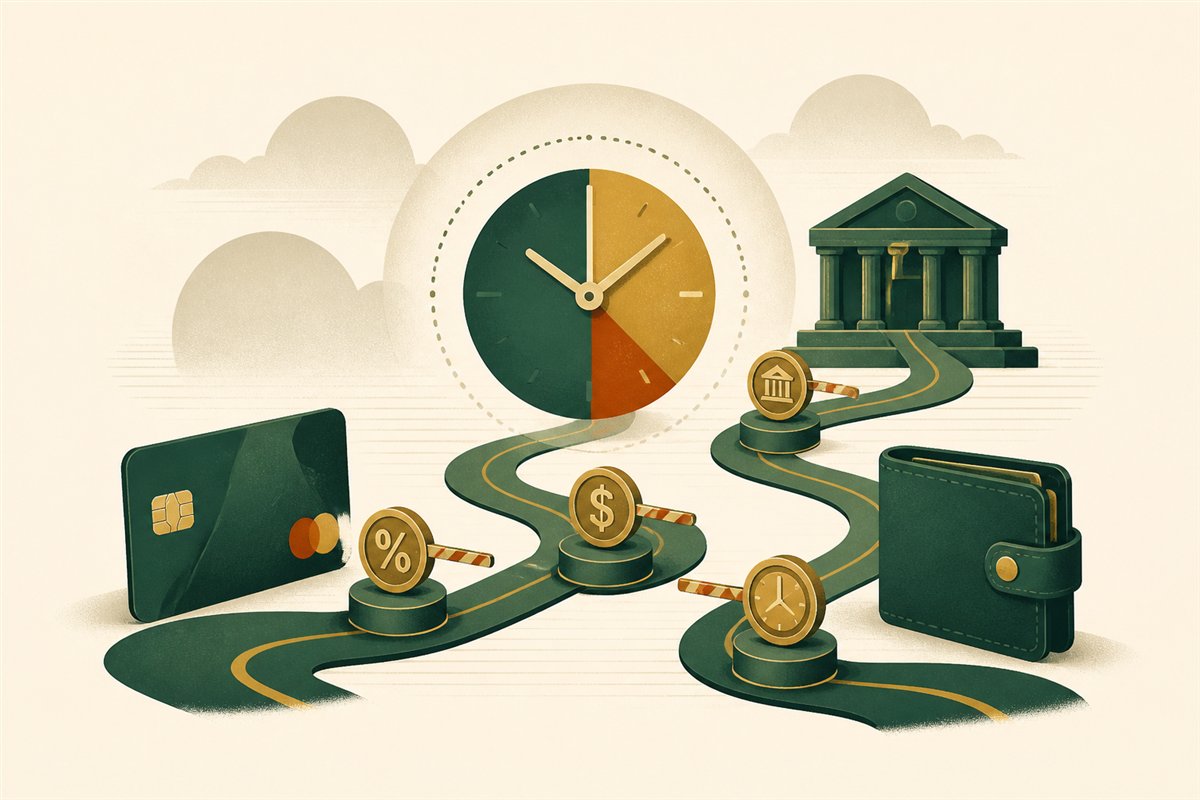
The six layers to separate
First, identify incorporation: where a legal entity was formed. Second, identify authorisation or registration: which authority recorded or authorised the entity, and for which services. Third, identify the contracting entity: the exact legal person in the terms you accepted. A multinational group can use different entities for a wallet, card, money-transfer service or country.
Fourth, check cross-border permission. If the firm is authorised in Country A and you live in Country B, the relevant question is whether the service may lawfully be offered to you under the applicable framework. Fifth, investigate safeguarding or another stated customer-fund arrangement. Safeguarding requirements for UK payment and e-money institutions are designed to protect relevant funds in insolvency, but they are not a synonym for bank-deposit insurance. Sixth, trace the complaint route before a dispute arises.
A practical verification sequence
Start with the terms of service actually attached to your product. Record the legal name, registration number, product name and country named for the agreement. Do not rely only on a brand homepage or a group-level footer. If a card, wallet and transfer product use different terms, treat them as different checks.
Then search the appropriate official register. For EU and EEA payment or electronic-money institutions, the EBA central register is a useful starting point, while authorisation remains a national authority's responsibility. In the UK, use the FCA Financial Services Register to check the entity and stated permissions. In the US, treat a FinCEN MSB entry as a federal registration check, then investigate the state-level permission relevant to your location separately.
Next, compare the entity in the terms with the entity found in the register. Ask how the firm serves your country, where its disclosures describe the customer-fund arrangement, and which complaint body or process applies. A mismatch is not automatically a warning sign; it is a reason to understand the structure before relying on a protection you assumed applied.
- Read the terms and identify the contracting entity.
- Check the relevant official register and the services recorded there.
- Confirm the basis for serving your country and product.
- Read the stated safeguarding or customer-fund arrangement without equating it with deposit insurance.
- Save the complaint route, time limits and the date you checked each source.
A hypothetical account journey
Imagine a payment app whose footer says it is incorporated in Ireland. The wallet terms name a company registered in England and Wales and show an FCA reference number. That gives you a sequence: check that company in the FCA register, read which permissions are shown, then read the product terms to see the account's stated complaint route and handling of relevant funds. The footer did not answer those questions; the contract and official sources did.
If the same brand offers a US transfer service through a Delaware entity, repeat the process instead of carrying over the UK conclusion. A FinCEN MSB registration is relevant federal information, but it is not a replacement for checking applicable state-based licensing. The lesson is not that every cross-border structure is unsafe. It is that a legal entity, permission and remedy must be verified for the account you actually hold.
What a register entry does not prove
A public register is evidence to investigate, not a universal consumer-protection certificate. The EBA notes that accidental inclusion or omission in its central register does not itself change an institution's legal status. An FCA register entry can help identify a firm and permissions, but it is not a rating of financial health or a promise that every product carries the same protection.
The same caution applies to labels such as safeguarding, licensed, registered and regulated. Read the scope of the rule, the entity to which it applies and the product covered. Protection can depend on the service, customer location, funds involved and the legal entity in the contract. Re-check the information before a major transfer because permissions, terms and complaint routes can change.
The useful question to ask before funding an account
Do not ask only, ‘Where is this company based?’ Ask, ‘Which entity contracted with me, who authorises that entity for this service, how is it permitted to serve me, what does the stated fund arrangement cover, and where can I complain?’ This takes longer than reading a footer, but it gives you a record you can use if the account is restricted or a transfer fails.
For a small test payment, the answer may affect how you document the transaction. For a balance you could not easily replace, it is basic due diligence. The country you expected to protect you may not be the jurisdiction that actually governs the account.
Practical checklist
- Save the latest terms for the precise product you use.
- Match the contracting entity to the official register entry.
- Check the permission to serve your country rather than assuming marketing availability is permission.
- Separate safeguarding from deposit insurance and read the applicable scope.
- Record the complaint route before you need it.
Sources and further reading
Fact-checked: . External sources open in a new tab.
- Register of payment and electronic money institutions under PSD2European Banking Authority
- Directive (EU) 2015/2366 on payment services (PSD2)European Union
- Safeguarding requirements for payment and e-money institutionsFinancial Conduct Authority
- Using payment service providersFinancial Conduct Authority
- Electronic money or digital currencyFinancial Ombudsman Service
- Money Services Business registrationFinancial Crimes Enforcement Network
- Interagency guidance on banking services to money services businessesFinancial Crimes Enforcement Network