Independent guide · Payments
How to prepare transaction records, correspondence and a timeline for a payment dispute
Step-by-step guidance on organising the transaction evidence, correspondence and a dated timeline to support a complaint or dispute with a bank, payment provider, merchant or ombudsman.
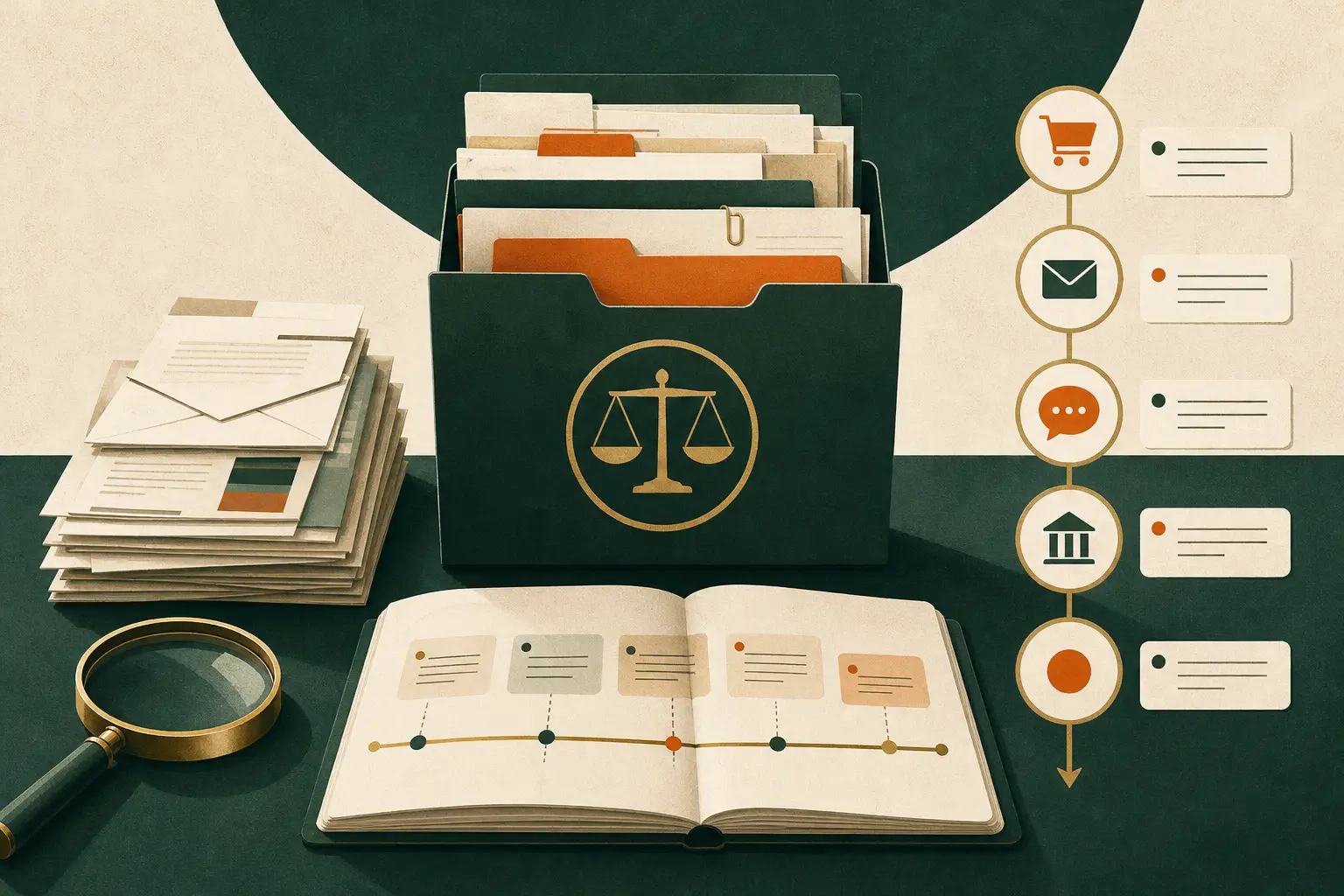
Why this matters
Clear, dated facts plus a separated customer narrative make investigations faster and reduce ambiguity; preserve originals, submit copies via official channels, and never share authentication credentials.
Start with clear facts, then add the customer account
Investigators rely first on recorded facts: dated statement lines, transaction and settlement identifiers, amounts and payment channels. Collect these items exactly as shown on your bank or provider records so they can be matched against provider logs.
Keep the customer’s explanation separate. Label one column or section “Recorded facts” (dates, IDs, receipts) and another “Customer account / explanation” (when you noticed the problem, what you think happened, actions you took). This separation reduces ambiguity for the investigator.
- Recorded facts = bank statement lines, transaction IDs, authorization codes, settlement refs.
- Customer account = timeline of what you noticed and when, communications you sent, requests made.
Core transaction data and supporting documents to gather
For each disputed entry collect: date/time (include timezone for cross‑border items), amount and currency (note conversions), merchant/beneficiary name and masked account numbers, payment method and channel, and any authorization or retrieval codes.
Supporting documents matter: full PDF statement pages, merchant receipts or invoices, order confirmations, delivery tracking, screenshots of app notifications, and any provider messages about refunds or reversals. Where fraud is suspected, include a police/incident report number if you have one.
- Transaction timestamps, currency and exchange-rate notes if conversion occurred.
- Authorization / retrieval / settlement / batch reference numbers; masked PAN/IBAN.
- PDF statement pages, receipts, order confirmations, delivery tracking, provider emails.
How to structure your correspondence and attachments
Start with a one‑page cover letter that summarises the dispute: the specific transactions, the remedy you want (refund, reversal, proof of delivery), and a numbered list of attached documents with short descriptions.
Attach dated copies (not originals) of all emails, SMS, app messages or screenshots. For each piece of correspondence note the date you first contacted the bank or merchant and include any complaint reference numbers the provider gave you.
- Cover letter: one page; key facts, requested remedy, list of attachments.
- Attach copies of all communications; annotate each with dates and reference numbers.
Create a dated two‑column timeline as the investigator’s quick reference
Make a simple timeline with two columns: left column for recorded evidence (statement entries, receipts, provider messages) and right column for the customer narrative (when you placed an order, when a delivery was expected, when you noticed the charge, and actions taken).
Keep entries short and dated. Investigators use this to reconstruct the most likely sequence of events; a clear timeline saves back‑and‑forth requests and speeds resolution.
- Two columns: Recorded fact | Customer account / action taken.
- Use ISO‑style timestamps where possible (YYYY‑MM‑DD HH:MM UTC) and include local timezone when relevant.
Practical checklist
- For each disputed transaction: date/time (include timezone), amount and currency, merchant/beneficiary name and country.
- Collect transaction identifiers: authorization code, transaction/settlement/reference IDs, retrieval number, masked PAN/IBAN.
- Gather supporting documents: PDF bank statement page, merchant receipt/invoice, order confirmation, delivery tracking, screenshots.
- Document complaint history: date you reported to provider, complaint reference number, provider responses (copies).
- If fraud suspected: police or incident report number and description (where applicable).
- Preserve originals; submit only copies via the provider’s official complaint portal or certified mail.
- Redact unrelated personal data before sharing; never share passwords, PINs or one‑time codes.
Sources and further reading
Fact-checked: . External sources open in a new tab.
- Disputed transactionsFinancial Ombudsman Service (UK) — guidance on evidence used in disputes
- How do I get my money back after I discover an unauthorized transaction or money missing from my bank account?Consumer Financial Protection Bureau (US)
- Make a complaint / Factsheet – Unauthorised transactionsAustralian Financial Complaints Authority (AFCA)
- Payment services — consumer informationEuropean Commission — payment services overview