Independent guide · Payments
Understand pending card payments, authorisation holds and completed charges
A practical guide to what 'pending' means on your card, why authorisation holds appear, how long holds typically last, and what happens when an authorised amount becomes a completed charge.
Why this matters
Pending payments are temporary authorisations that reserve funds and protect merchants and cardholders; they are not final charges until the merchant captures or the hold expires, and the rules and timing depend on card networks, merchant type and processor settings. (docs.stripe.com)
What are pending card payments and authorisation holds?
A pending card payment is usually an authorisation hold: the card issuer confirms the card is valid and reserves (or 'places a hold on') the expected amount so a merchant can guarantee funds while completing the sale or service. This placeholder appears in your app or statement as a pending transaction and reduces your available balance until settlement or release. (docs.stripe.com)
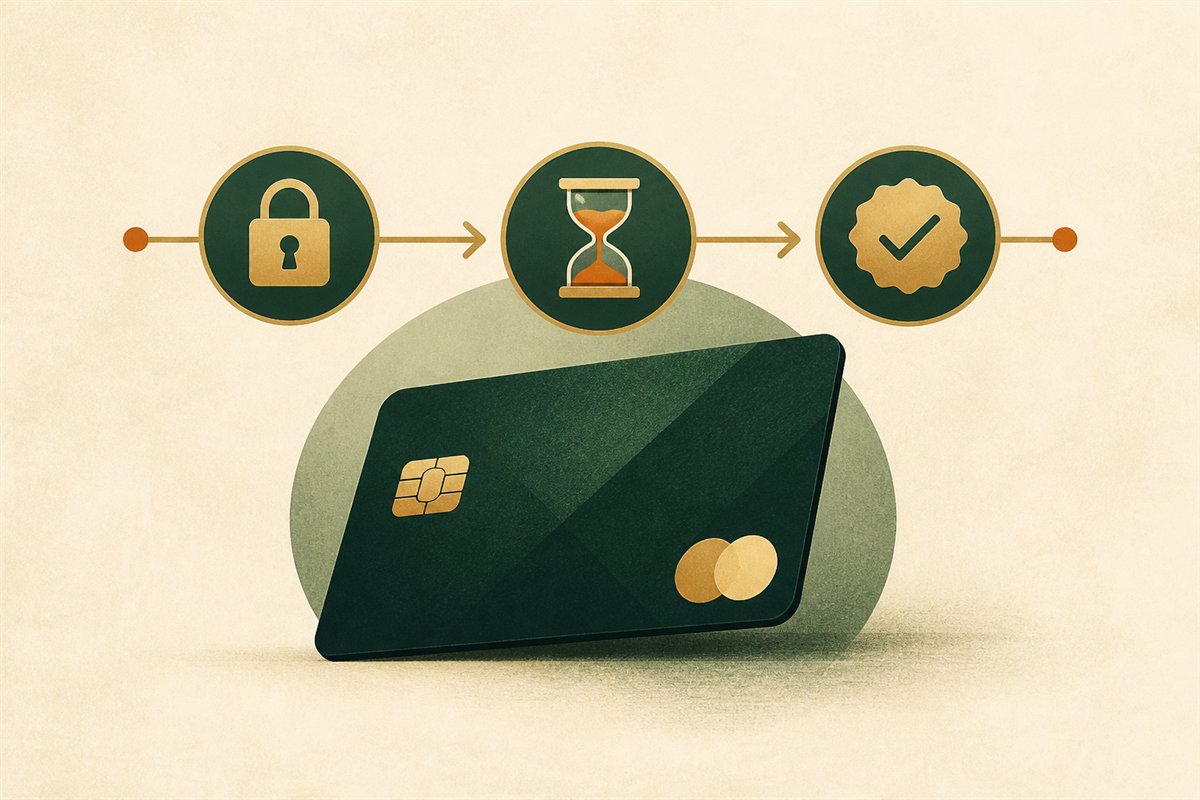
An authorisation is not a final charge. The merchant must later ‘capture’ the authorised amount (or a different final amount where rules allow), which posts as the completed charge; if the merchant does nothing the hold will expire and the reserved funds will be released. Different card networks, merchant categories and processors set the valid window for a hold. (usa.visa.com)
- Pending = authorisation hold in most card transactions.
- Authorisation reserves funds; capture posts the final charge.
- If not captured, holds expire and funds are released.
- Timing depends on card brand and merchant category.
Why merchants use holds (and when you’ll see them)
Merchants use authorisation holds for a few common reasons: to verify the card, to reserve funds for estimated amounts (hotels, car rentals, restaurants with tips), or to protect against fraud and returns. This two‑step flow (authorise, then capture) gives merchants flexibility when the final amount is unknown at the moment of checkout. (mastercard.us)
You’ll frequently see holds with hospitality, vehicle rentals, fuel pumps and some online purchases where merchants send authorisations before final settlement. Small authorisations (e.g., $1) may be used to validate cards in specific merchant flows. Rules and accepted practices for estimates and increments are documented by card networks. (usa.visa.com)
- Hotels, car rentals and fuel stations commonly use estimated authorisations.
- Merchants may add incremental authorisations if the final amount grows.
- Small $1 authorisations are used to verify card validity.
- Card network rules set allowed behaviors for these flows.
How long do holds last, and when do they become posted charges?
Authorization validity windows vary by network and transaction type. For card‑not‑present payments many processors and card brands use seven days as a common limit, but Visa’s timing is shorter in some cases (about 4 days 18 hours for certain flows) and Mastercard and others have their own rules — and some merchant categories (like lodging or rentals) allow longer or incremental rules. Check your issuer or payment processor for exact timing. (docs.stripe.com)
If the merchant captures within the validity window, the pending authorisation is replaced by a posted (completed) charge for the captured amount. If the merchant sends a reversal before capture, the issuer releases the hold sooner; if the merchant never captures, the hold expires and funds return to availability according to issuer timing. (docs.stripe.com)
- Typical online (card‑not‑present) holds: commonly up to 7 days for many networks.
- Visa uses ~4 days 18 hours in some flows; others vary by brand and region.
- Hotels/rentals can use estimated authorisations and incremental requests.
- Reversals from merchants can speed hold release; otherwise holds expire.
What consumers should do when they see pending holds
First check whether the pending item matches a recent merchant action (hotel, rental, gas, online store). Contact the merchant for clarification or to request a reversal if the charge was cancelled. Merchants can usually send a reversal that prompts the issuer to release the hold sooner than waiting for expiry. (docs.stripe.com)
If you believe a posted or pending charge is unauthorized, notify your bank or card issuer promptly and follow their dispute process. For debit card unauthorised transactions, federal rules give time‑sensitive protections (notify within two business days to limit liability in many cases); the CFPB explains how to get your money back and the issuer’s investigation timeline. (consumerfinance.gov)
- Match the pending hold to merchant/booking receipts first.
- Ask the merchant to send a reversal if the transaction was cancelled.
- Contact the issuer quickly for unauthorised charges (follow dispute rules).
- Keep receipts and timestamps to help investigations.
Practical checklist
- Look at your bank app: confirm merchant name, amount and timestamp.
- If you recognise the merchant, wait 24–72 hours (or check merchant policy) before worrying — some holds convert to final charges when the merchant settles.
- Contact the merchant and ask for a reversal if the transaction was cancelled or duplicated.
- If unauthorised or unresolved, contact your card issuer and follow their dispute process (see CFPB guidance on timelines). (consumerfinance.gov)
Sources and further reading
Fact-checked: . External sources open in a new tab.
- Place a hold on a payment method (authorization windows and captures)Stripe
- Authorization and Reversal Processing — Best practices for merchantsVisa
- Transaction Processing RulesMastercard
- How do I get my money back after I discover an unauthorized transaction or money missing from my bank account?Consumer Financial Protection Bureau (CFPB)