Independent guide · Payments
Cancelling a subscription vs stopping recurring card payments (UK)
Clear explanation of the difference between ending a subscription contract and cancelling a card-based recurring payment (CPA), why replacing a card may not stop charges, and a practical checklist for consumers in the UK.
Why this matters
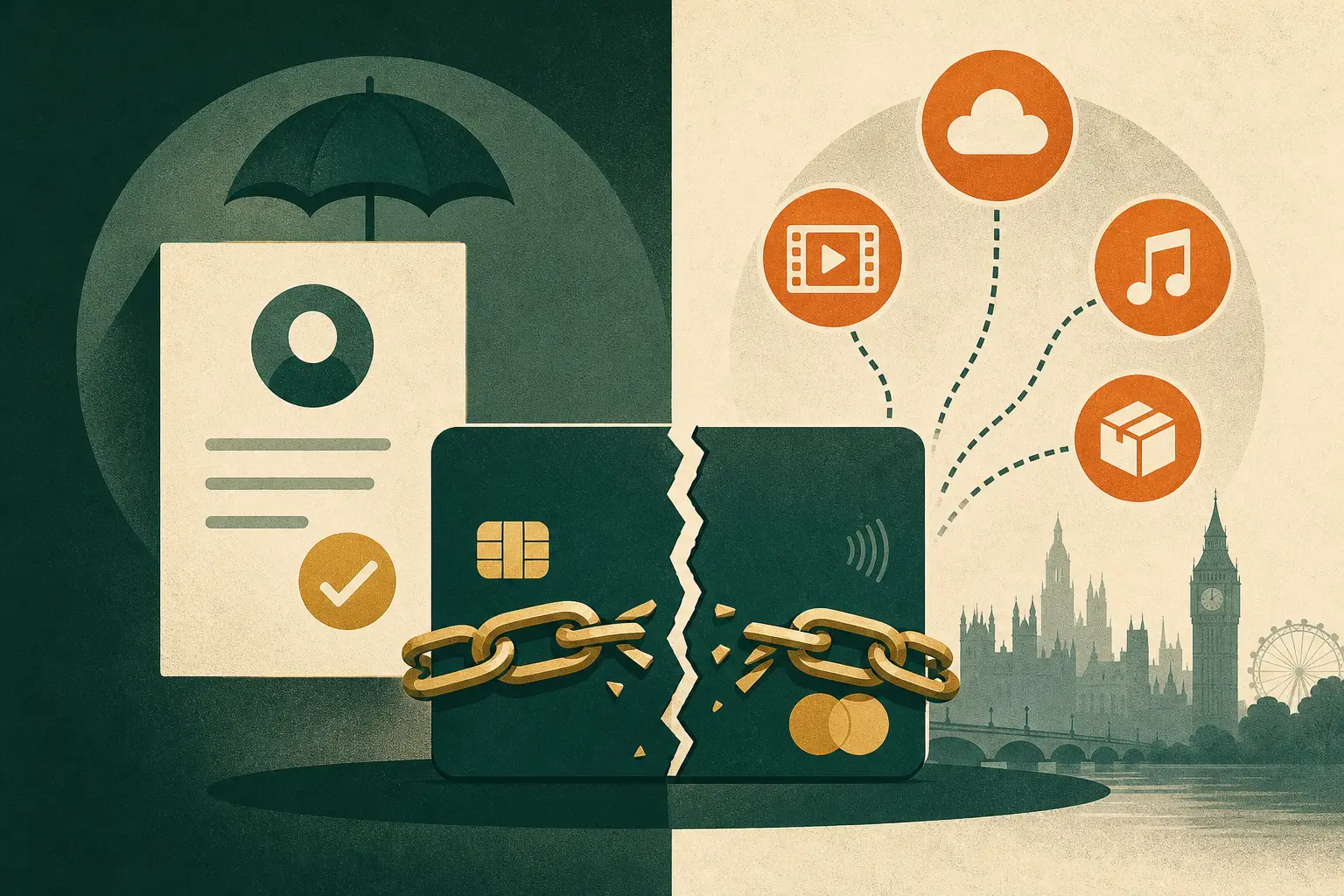
Cancelling the merchant contract and cancelling the card issuer’s recurring-payment authority are separate actions — do both and keep evidence; replacing a card alone may not stop charges because merchants can be charged via updated card credentials.
Two different actions: contract cancellation vs stopping card payments
Cancelling the subscription contract with the merchant and cancelling a recurring card payment instruction (often called a Continuous Payment Authority, or CPA) with your card issuer are legally and practically different. The FCA makes this distinction clear: cancelling a CPA does not automatically cancel your underlying contract with the merchant.
Because they are separate, to stop both the service and future card debits you normally need to: (1) follow the merchant’s cancellation process so your contractual obligations end, and (2) contact your card issuer to cancel the CPA so the merchant cannot take further payments from that card.
- Contract cancellation ends your obligation to the merchant when done correctly under the contract terms.
- CPA cancellation prevents future debits from that card but does not itself change the merchant contract.
Why replacing a card might not stop charges
Replacing or cancelling a physical card does not always prevent merchants from charging you. Many merchants use stored card credentials or tokenisation; card networks and banks may update those tokens to a replacement card number so recurring payments keep working.
Therefore, simply receiving a new card number from your issuer is not a reliable way to stop a subscription. To be safe you should explicitly cancel the subscription with the merchant and ask the issuer to cancel the CPA and confirm whether they block credential carry-forward to replacement cards.
- Stored credentials or tokenised payments can be automatically updated to a replacement card.
- Ask the issuer whether they will prevent the merchant’s credentials from being carried forward.
Practical steps and evidence to gather
Act quickly: record the date you subscribed, the terms you agreed, the exact card used, and how and when you requested cancellation. Use written channels where possible and save confirmations (emails, screenshots, chat logs, or recorded call references where lawful).
If payments continue, contact your issuer immediately to cancel the CPA and request a reversal/chargeback. If the issuer’s response is unsatisfactory, use its complaints process and, if unresolved, escalate to the Financial Ombudsman Service with your evidence.
- Keep order/account numbers, dates and screenshots.
- Get an issuer reference number for any CPA cancellation or dispute.
Practical checklist
- Have your account/order number and the exact card details used to pay.
- Cancel the subscription by the merchant’s stated process and save the confirmation.
- Note and preserve any contract terms (minimum term, notice period, fees).
- Contact your card issuer and ask explicitly to cancel the recurring card payment (CPA); get written confirmation or a reference.
- Ask the issuer whether they will block credential carry-forward to replacement cards.
- If charges continue, report them to the issuer immediately and request a reversal/chargeback; keep the issuer’s responses and reference numbers.
- If the issuer refuses or delays, use its complaints process and consider the Financial Ombudsman Service with your documentation.
Sources and further reading
Fact-checked: . External sources open in a new tab.
- Recurring card paymentsFCA
- Regular payments — disputed transactions and sample decisionsFinancial Ombudsman Service
- Stopping a future payment on your debit or credit cardCitizens Advice
- Direct debits and standing orders — guidanceMoneyHelper